Please disable your AdBlocker, it helps keep Avian Directory free for all bird lovers to use.
Register an account or Log in. Logged in members do not see adverts!
Thank You
Learn how bird droppings can reveal important clues about health, diet, and disease, with visual examples and clear explanations.
Although some may think of bird droppings as just one of those annoying things which need to be cleaned up all the time, they can in fact tell you a lot about your birds’ health.
If you do not own a microscope, you can still get valuable information from observing a single fresh dropping.
Of course, if you owned a microscope you would be in a far better position to see what might be wrong with a dropping (stool).
Many things can affect the overall appearance of a dropping from failing internal organs, diet, digestive tract blockages, disease, parasites or bacterial infections.
Whenever I find a sick bird, one of the first things I look at will be the last fresh dropping.
From a visual observation, if you noticed the fresh dropping was dry you’d know the bird was not drinking enough or if there was the absence of faecal matter then the bird is probably not eating enough.
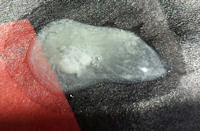
The absence or any abnormality in the urates will usually point to the kidneys.
As you can see you can get a rough idea what could be wrong by visual observation, but if let’s say, your bird has green urates, you’d know it was the kidneys unless it drank something with a green dye, but you would not know the actual cause.
If the dropping had a nasty smell, then you would know something was wrong, but you’d have no idea what.
This is why I like to have a microscope.
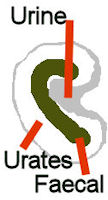
Stools are made up of three parts, as shown in Figure 1:
Faecal matter is basically that which has come from the gut and is made up of what the bird has eaten.
The colour and consistency can change depending on what the bird has eaten and how frequently it has eaten.
Some parasites, bacteria, internal injury or even consuming sharp objects can cause internal bleeding which can result in passing fresh or dried blood in the faecal matter.
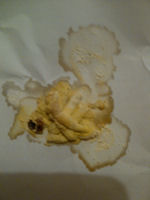
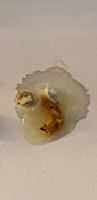
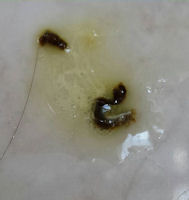
Fresh blood is usually lower down in the digestive tract, black or dried blood will usually be in the upper digestive tract.
Sometimes black or dried blood can be from an injury within the mouth, throat, crop or has in some way consumed fresh blood (maybe from an external injury) but by the time it passes in the faecal matter it will appear dried or black (old blood).
Bacterial infections, protozoa, internal parasites, fungal infections, yeast infections are also among many which can also change the consistency, texture, mass and shape of the faecal matter.
The colour of the faecal matter will usually have a similar colour of the foods it has eaten.
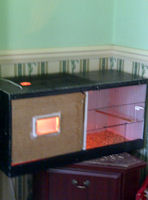
Foods which contain strong dyes such as berries, beetroot, carrot, chard stems or some soft foods may result in strong red faecal matter strongly resembling fresh blood.
Some foods such as blueberries or other foods with a strong blue colour will turn the faecal matter blue.
I feed my Gouldians and other finches a large variety of fresh greens such as various cabbage types, spinach, kales, garden cress, water cress, wild rocket, grated Brussels sprouts, grated carrots, mint leaves, basil leaves, fresh thyme, beet leaves, chickweed, dandelion (when in season the leaves, flower, seeds, stem and roots), oregano, cucumber and many more.
These fresh greens never really change the colour of their faecal matter and always look healthy.
Finches that eat only millet seeds will usually have a beige or light brown grainy looking faecal matter, which is not really a healthy diet anyway.
There should be no smell, dark green in appearance but not pea green.
When you look at healthy birds’ droppings over the years, you will soon notice which looks normal to that which looks wrong.
Runny faecal matter may also be seen where the faecal has no form and the whole stool appears as a runny mush, this is known as diarrhoea.
The causes of diarrhoea can be many, ranging from bacterial infections to fear and everything in between.
Stools that contain too much urine with mashed faecal and or mashed urates are classed as diarrhoea usually, but can also carry an odour.
Stools that appear runny because they contain urates and urine but have the absence of faecal matter is not really classed as diarrhoea unless the urine is excessive with bits of faecal blended in.
Normal urates with normal urine without or very little faecal will often mean the bird is simply not eating or not eating enough, else there may be a blockage.
True diarrhoea is when faecal matter in a liquid form is passed from the bowels in a frequent manner.
Most of the time, when a vet takes a stool sample, it will be from the faecal matter to see what is going on within the digestive tract.
You cannot see what is happening within the digestive tract from looking at the urates or urine under a microscope because these are excretes from other internal organs such as the kidneys or liver.
This is the pure white part of a stool which resembles freshly squeezed white toothpaste (please don’t brush your teeth with it though lol).
Birds’ kidneys filter, absorb, secrete or excrete.
The kidneys filter water and some substances from blood, waste products of metabolism and ions that are unwanted in the urine are examples.
(Abstract from another article): Kidneys also play an important role in conserving water and reabsorbing needed substances (like glucose).
The kidneys produce urates (concentrated uric acid) and urine during its filtration process before being forwarded to the cloaca.
At the same time as the urates and urine are expelled, so too are the faecal matter which has been expelled from the last part of the digestive tract.
The colour, texture also the mass of the urates can give you a good idea of the condition of the bird’s kidneys.
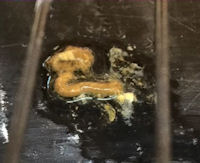
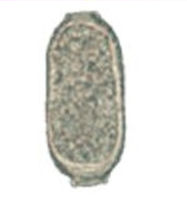
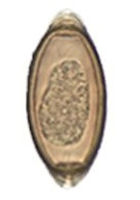
Over the years I have seen many finches with kidney disease, infections or kidneys that did not grow properly and without special care the prognosis is rarely good.
Regular tap water can be bad for your bird’s kidneys because of the chemicals, excessive hardness (high pH value), and the fact it is not filtered well if at all.
Most avian vets will advise offering your birds ‘clean’ water such as water which has been through a process of reverse osmosis (RO), filtered water which has also been left with an open-top for at least 24 hours to release any chemicals, natural spring water (no additives), pre-boiled water and filtered, distilled water that has been boiled into vapour and condensed back into liquid in a separate container.
If you do find you have a bird with kidney failure or other kidney problems then stop giving them tap water right away and offer one of the above ‘clean’ pure water, it helps the kidneys from working too hard and can concentrate on healing itself whilst on any medications.
The urine is the clear watery part of the stool (see Figure 1.) which can vary in quantity, colour and sometimes have a smell.
Urine is produced by the kidneys, and the urine can change colour or have an odour when something is wrong.
I do not want to go into details here too much about the function of internal organs and will leave that for the Internal Organ section where they will be explained in detail.
Birds that drink excessively will have much more watery stools than normal stools.
It also works the other way, if they drink too little the stools will appear to have much less water depending on the amount they drink.
I have seen quite a few charts on the average water intake per day for a finch and other finches for that matter, but in reality I believe all those charts are void because there are too many variables to take into account.
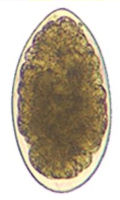
On a hot day the bird will drink a lot more to cool down, on a cold day it will drink far less than a hot day.
What is an average day?
In Australia, Queensland (Home of the Gouldian Finch) the seasons are not always the same, not every day is the same and there may be a lot of rain one week as opposed to none for weeks or even months after.
In captivity where the environment or climate can be controlled, each day they may still drink more or less for various reasons.
When raising young they will drink much more, if they are feeling sick or just not thirsty that day etc then they will drink less.
If you are looking at per average each bird which is in a separate cage over the course of a year, then it would be generally about half to two–thirds of their own body weight a day.
I might also add that it also depends on what temperatures you keep your birds at in controlled environments.
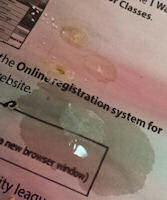
As in Figure 2. This shows the average normal stool from a Gouldian finch taken after the breeding season had ended.
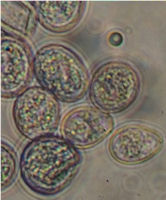
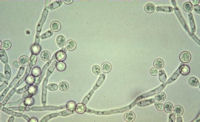
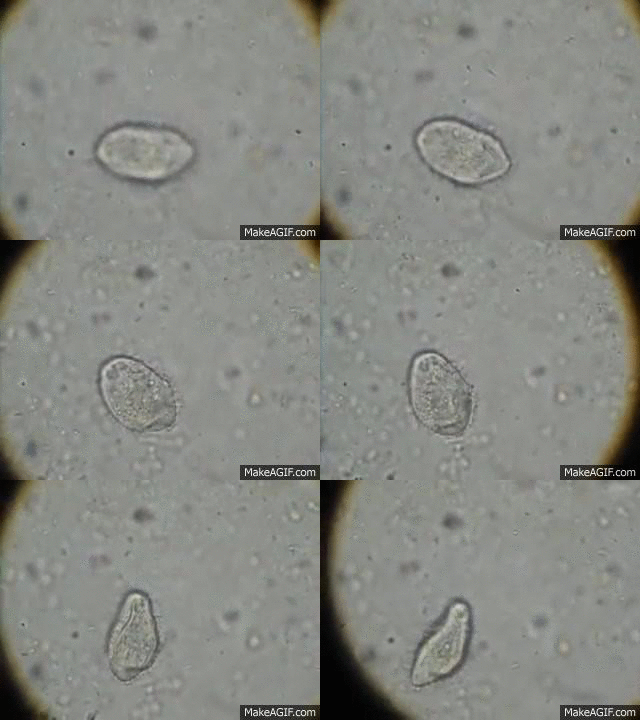
The Gouldian (whose stool this came from) diet is a good variety of millet seeds, a large variety of fresh vegetables and herbs and freshly picked millet sprays.
They also have undyed soft foods (Versele Laga - Orlux - Uni Patée).
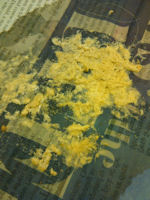
If they ate only seed, then the stool would look very different from that of Figure 2.
The photo in Figure 3. is from a Gouldian finch who only ate seed because this was all it was given by the keeper, notice the colour and texture difference in Figure 2.
The faecal and urates should be well-formed and roughly equal in size with the urates being slightly larger, the urine usually seems less than both.
Remember that some of the water consumed will come out in sweat glands throughout the body.
Over the years droppings have been given nicknames according to their general appearance such as popcorn poop, scrambled egg poop, mush or even clay, but these just categorize their appearance only.
You can sometimes get a rough idea what might be wrong with the bird from their dropping identification, but it is not a reliable way of identifying a health issue.
When you see the images and compare them with their nicknames, you will understand how their identification came about.
| Appearance | Possible Cause / Notes |
|---|---|
| Black | Old Blood (Upper Digestive Tract), Result of Avian Gastric Yeast (AGY), Consumption of blood (possibly from a wound). |
| Pea Green | Bright green indicates Liver Issues; darker greens due to diet are normal. |
| Red | Fresh Blood – Lower Digestive Tract (possibly AGY, Coccidiosis, or internal injury). |
| Grey | Digestive problems, or if urates are grey from pancreatic issues, faeces may also appear grey. |
| Excessive | Common in nesting hens; Overeating. |
| None or Absent | Starvation, Parasitic Worms, Intestinal Blockage. |
| Contains Undigested Seed | Worn gizzards, Parasitic worms, Giardia, Digestive Disorders, Coccidiosis, AGY, Campylobacter, Cancer. |
| Fragmented & watery | Diarrhoea, Bacterial, Internal Parasites. |
| Appearance | Possible Cause / Notes |
|---|---|
| Brown | Lead Poisoning. |
| Pea Green | Liver Disease, Weight Loss, Blood disorders. |
| Red | Fresh Blood (Lower Digestive Tract), Cancer, Tumour or Internal Injury. |
| White | Normal Healthy. |
| Yellow | Liver Disease, Weight Loss, Renal disease. |
| Grey | Pancreas. |
| Excessive | Kidney Failure, Gout, Chronic Dehydration, Improper Diet (high protein), Too much vitamin D or Too little Vitamin A. |
| None or Absent | Too much soft foods and/or consuming too much water. |
| Appearance | Possible Cause / Notes |
|---|---|
| Pea Green | Liver Disease. |
| Red | Fresh Blood (Lower Digestive Tract), Cancer, Tumour or Internal Injury. |
| Yellow | Liver Disease. |
| Grey | Either staining from food, or if urates are grey from pancreatic issues, urine may also appear grey. |
| Excessive | Consuming too much water, wet foods, fruit/vegetables, bacterial infections, Polyuria. |
| None or Absent | Dehydration, Failed or Failing Liver or Kidneys, Not Drinking Enough Water. |
As you can see from all of the above, there is a lot more to bird droppings than meets the eye. Close observations can save your birds’ lives, and you need to pay attention to details.
A nesting hen will often have very large droppings first thing in the morning, and this is normal because they go to the toilet much less often. This allows them to spend more time sitting on the eggs or caring for young.
Stools with a foul-smelling odour are usually caused by a bacterial infection. Most of the time I encountered stools which had an odour so bad it made the whole room smell, and looking at samples under the microscope proved Candida was the culprit.
Stools which are yellow or contain a lot of yellow staining usually indicate weight loss and may also signal a liver issue, provided the yellow stain was not caused by food, vitamin drops, or medication. Some foods, medications, or supplements have strong colours and can result in stained droppings, giving a false reading.
Birds with an internal blockage can drink excessively to try and dislodge the obstruction, resulting in very watery droppings. Birds also tend to consume a lot of water whilst bathing, which can produce watery droppings as well.
In hot weather, birds will drink more to stay hydrated and cool down, also resulting in watery droppings. Excessive watery droppings do not always mean diarrhoea. There is a distinct difference between generally watery droppings and true diarrhoea. The duration of watery droppings is also important: if droppings are watery for more than a day, closer inspection may be required.
Droppings that appear red or contain any red staining not caused by food or drink should raise alarm bells. Red in the stools could signify internal bleeding, so always check what the bird has consumed before assuming it is blood.
Some internal parasites or bacteria can cause internal bleeding, such as Coccidiosis, Avian Gastric Yeast, Canker, or Cancer, as they eat into the walls of the digestive tract. Sharp objects passing through the bird internally can also cause bleeding, which would result in red stains in the stools. Some medications can also cause internal bleeding, especially if overused or administered for too long, again resulting in red-stained droppings.