

Please disable your AdBlocker, it helps keep Avian Directory free for all bird lovers to use.
Register an account or Log in. Logged in members do not see adverts!
Thank You
A suitable environment is essential for the health and wellbeing of your pet birds, influencing their behaviour, comfort, and overall quality of life.
The type of cage or aviary where you plan to keep your birds, and where it is located, will play a vital role in their mental as well as physical well-being. There are certain types of cages that are not suitable for finches at all. While most aviaries are generally suitable due to their size, some can harbour many unnoticed problems.
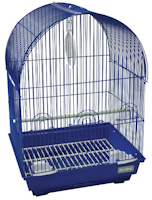
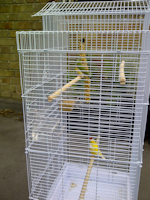
Tall, narrow cages are not healthy because finches fly side to side, not up and down. The best cages are elongated, with a minimum height of 18 inches — the wider, the better — allowing them to use their wings properly. On the right are examples of cages that are not suitable for smaller birds, for obvious reasons.
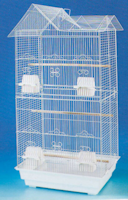
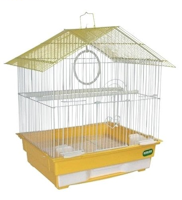
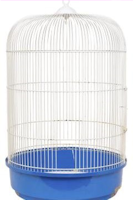
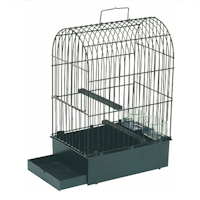
All the cages shown (Figures 1–6 & Figure 8) are not suitable for any kind of finch to live in. They are acceptable only as transportation cages, hospital cages, or for showing a bird for a very short period of time.
These types of cages are wired on all sides and provide no safe place for birds to hide from predators.
Figures 1 and 3 are cages that focus on height rather than width, leaving no room for proper flight. Figures 2, 4, and 5 have neither adequate height nor width, offering no space to fly, very little room for perches, and often wired bottoms, which are unsuitable for any bird.
Figure 6 is one of my cages, while unsuitable for permanent housing, is used to take up to two birds at a time to put outside so they can spend time in direct sunlight.
These birds are normally kept indoors in a large aviary where natural sunlight is limited. Any cages left outdoors with birds in them are never left unattended due to predators.
Birds may spend anywhere from one hour up to several hours a day enjoying direct sunlight, with half of the cage shaded on hot days. Cages should never be left unattended outdoors, as birds housed in small cages are easy prey.
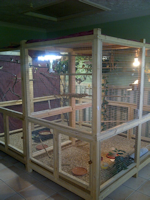
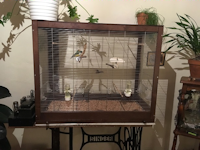
Figure 7 shows my indoor aviary, which provides ample space along with correct lighting and heating. Feeders, baths, and drinkers are positioned so that perching birds cannot defecate into them, helping to reduce the spread of any bacteria that may be present.
The aviary uses mostly natural perches from safe tree species, and any dowel perches that were originally used have since been replaced with natural branches.
These types of cages (Figures 1–6) are often advertised and sold as finch or canary cages, but in reality they are only suitable for a pretend bird, such as a stuffed toy.
It is irresponsible to consider allowing a bird to spend its entire life in such a cage. If this is the intention, it would be better to consider a different type of pet, such as a mouse.
The wellbeing of your birds is paramount, and to achieve this they need space — lots of space.
Bigger is always better, even if you keep only one pair of gouldian finches. They need room to fly, explore, play, roost, bathe, and feed. These activities should not all take place in the same area, as this results in cramped conditions.
Birds, such as Gouldian finches may begin to exhibit signs of stargazing (often misdiagnosed as twirling) when kept in confined spaces or when perches are positioned too close to the top of the cage.
While they may spend a lot of time resting in a favourite spot, they will also have regular periods of flight for exercise.
Cramped conditions can lead to depression, serious weight loss, and loss of appetite. Birds may exhibit abnormal behaviour, excessive clinging to cage wires, lethargy, or stress, and may even become cage-bound.
The shape of the housing is far less important than the overall size. What really matters is the usable space (width × length), along with adequate headroom (height). Aviaries are usually measured in feet, while cages are typically measured in inches, depending on the country.
Cages for Gouldian finches should be rectangular in shape, with a minimum size of 36 inches long, 18 inches high, and 14 inches wide. Width is the most critical dimension, as it provides essential flight space. Aviaries are essentially larger cages, and when it comes to size, bigger is always better.
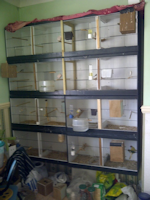
I have found the best cages for Gouldian finches are the wooden box types with cage fronts. I always remove any slide-out trays and block the gaps beneath them, as mites commonly hide under these trays during infestations. For flooring, I use hemp chips in all my cages. They are odourless, absorb moisture well, are easy to clean, and are inexpensive
Plain paper can also be used if preferred, but newspaper should be avoided, as some inks can be toxic to birds. Other wood-based substrates may be suitable, but never use wood shavings, sawdust, or sand, as these can cause serious problems.
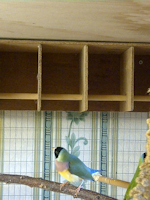
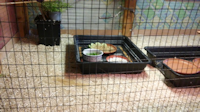
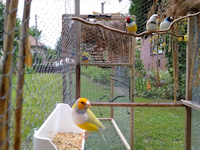
Avoid cages with wired bottoms. These cages cause numerous problems for birds and are responsible for many preventable injuries. Birds commonly lose toes or feet, and in some cases suffer broken legs or wings after becoming trapped in the wire mesh. Imagine walking barefoot on wire mesh all day — this is exactly what your birds experience. Over time, this can lead to arthritis, cramps, deformities, and serious foot conditions.
Bumblefoot (also known as tassel foot) is particularly common in birds kept on wired floors. It often starts as a small sore, becomes infected, and if left untreated can result in the loss of an entire foot or leg.
When discussing environments for birds, there are two equally important aspects to consider: the environment inside the cage or aviary, and the environment outside it. Both must be carefully planned. The best place to start is the external environment — the room or outdoor location where the cage or aviary will be placed.
Before housing birds, you must decide where the cage or aviary will be placed. Will it be indoors or outdoors? If indoors, which room? Is it a sunny location? Is it exposed to drafts, cold air, excessive heat, fumes, or heavy foot traffic? Are there other animals that could stress or harm the birds? Will there be adequate light and ventilation?
Fumes are my number one concern. I never place a cage or aviary near a kitchen. Kitchens pose serious risks due to burning food, overheated pans, chemical storage, and fire hazards.
Keeping large numbers of birds indoors is not advisable, especially for individuals with asthma or other respiratory conditions. Over time, dust buildup in enclosed spaces can cause bird fancier’s lung, a serious condition that can lead to long-term health issues in humans.
A strict cleaning routine is essential. I always clean inside the cages first, then the surrounding room. Every few months, wipe down all surfaces and walls using water and a mild sterilising solution to keep airborne dust under control.
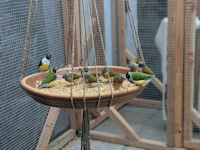
The inside of the cage or aviary is where your birds live and must be kept clean at all times. Smaller cages require more frequent cleaning. Perches should be carefully positioned — never too close to the roof, as this can cause stargazing. Avoid placing food dishes, drinkers, or baths beneath perches, as droppings will contaminate them.
Avoid plastic perches. While easy to clean, they do nothing for foot health. Sandpaper-covered perches should also be avoided, as they cause sore feet and do not properly maintain claws. Always use natural branches, ensuring they come from bird-safe tree species.
Gouldian finches enjoy a stimulating environment. They like multiple perches, swings, foliage (real or artificial), privacy roosts, and plenty of flight space. Overcrowding should always be avoided.
Bathing water must be kept clean. If the water is dirty, birds will often refuse to bathe. Scrub baths daily and provide fresh water; during hot weather, change it several times a day.
If birds lack access to direct sunlight, or only receive light through glass, supplemental UVB lighting is essential. Glass and plastic block UV rays, preventing natural vitamin D production. UVB lights designed specifically for birds help prevent weakness, loss of flight ability, poor perching, weight loss, and other serious health problems. Never use standard UV lights — only UVB lighting is appropriate.
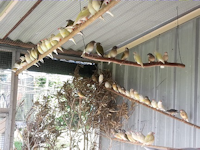
Avoid drafty locations at all costs, as they can lead to severe illness or death. Carpeted rooms should also be avoided, as carpets harbour mites and lice. Any damp areas caused by leaking drinkers or baths must be addressed immediately. Rust should never be present — if you see it, deal with it straight away.
If decorating a bird room, either use bird-safe paints or remove the cage entirely until fumes have fully dissipated. Never paint cages or aviaries with oil-based paints or paints containing heavy metals, as birds that peck painted surfaces can suffer fatal poisoning.

I keep a small heat lamp available, often a simple 40-watt incandescent bulb. This is helpful during cooler days and can also act as an early illness indicator. A Gouldian that constantly sits under the heat source instead of briefly warming up and moving on should be health-checked.
A stimulating environment prevents boredom, which can otherwise lead to fighting, stress, or illness.
The cage or aviary floor should never be left bare. Suitable substrates include plain paper, straw, dried grass, or wood-based materials such as hemp chips. Clean floors are critical, as birds frequently forage on the ground and may peck at droppings. This behaviour is one of the fastest ways bacteria, parasites, and infections spread.
Cold, damp, mouldy, or drafty rooms should never be used for housing birds. Clean, bright rooms with stable temperatures are ideal. Although this section may seem like a list of dos and don’ts, it highlights many of the common and preventable mistakes bird keepers make. I have seen birds kept in rooms with black mould present — a serious health hazard even to humans.
Cages such as those shown in Figures 1–6 often have removable wire bottoms. I always remove these, as birds frequently become trapped in them. Droppings often stick to the mesh and are overlooked during cleaning, creating a serious hygiene risk. Many injuries and deaths occur when birds become snagged and panic while trying to escape.
These cages are suitable only for transport, temporary isolation, hospital use, or photography. They should never be used for long-term housing. Birds kept in such confined spaces suffer from boredom, lack of stimulation, and insufficient exercise, often leading to illness or death.
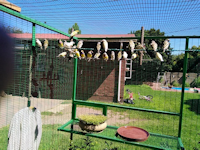
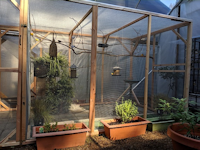
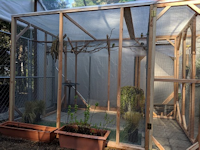
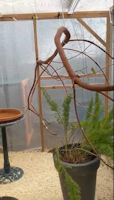
Many of the photos shown, aside from Figures 1–6, are either my own setups or submitted by dedicated keepers. Serious finch keepers provide spacious, clean, and thoughtfully designed environments. It takes very little extra effort to make a significant difference — not only for the birds, but for the keeper as well.
Small cages promote disease, parasites, and poor hygiene. Bigger is always better. Finches are not true cage birds; they are aviary birds that require space to fly, particularly as some species are territorial. Aviaries should be sheltered from wind and rain, partially shaded from intense sun, and kept dry at all times. Food and water should never be placed beneath perches or near each other to prevent contamination.