







Please disable your AdBlocker, it helps keep Avian Directory free for all bird lovers to use.
Register an account or Log in. Logged in members do not see adverts!
Thank You
We have created some very useful charts to help with looking after your Gouldian Finches, we also list other charts not created by us.
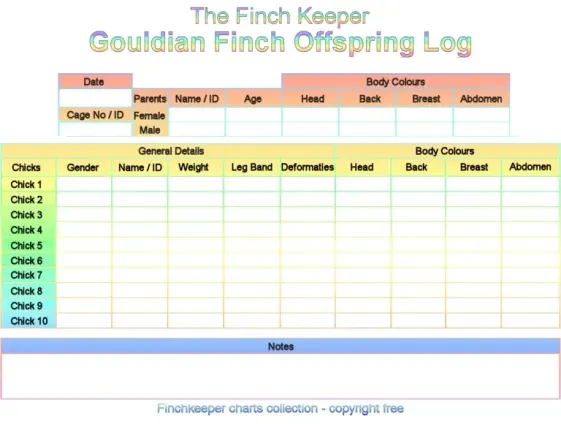
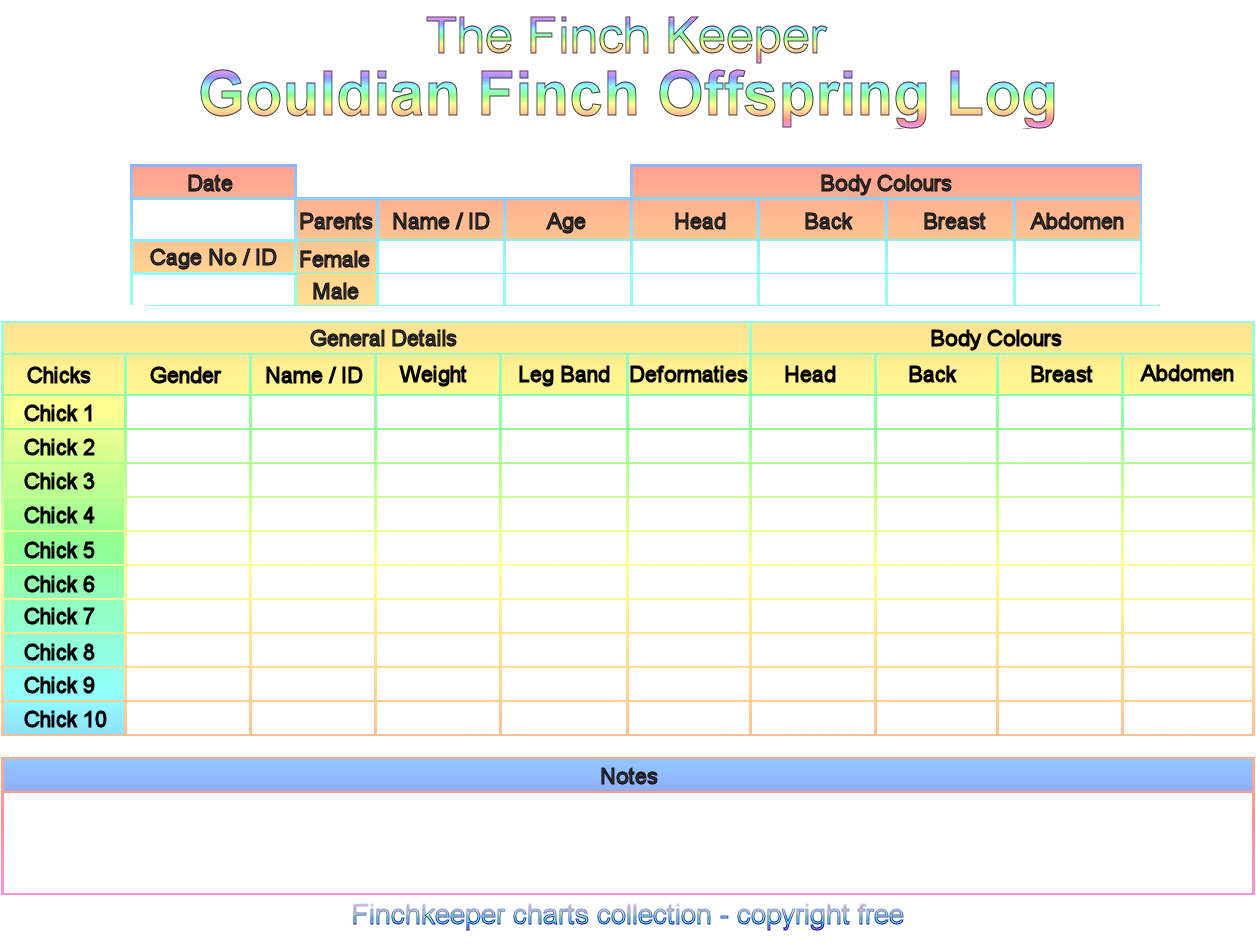
Although Gouldian Finches rarely produce 10 chicks in a clutch, it is not unheard of. This chart does allow for up to 10 chicks at a time to be logged.
The top section is nicely organised to keep track of the parent birds noting the cage number if required, date when breeding began, name or ID of each parent, colour of head, body, abdomen and back respectively.
In the chick section, there are various useful details to log for each individual chick including a Notes section at the bottom.
Much thought went into designing this chart, we hope you enjoy it.
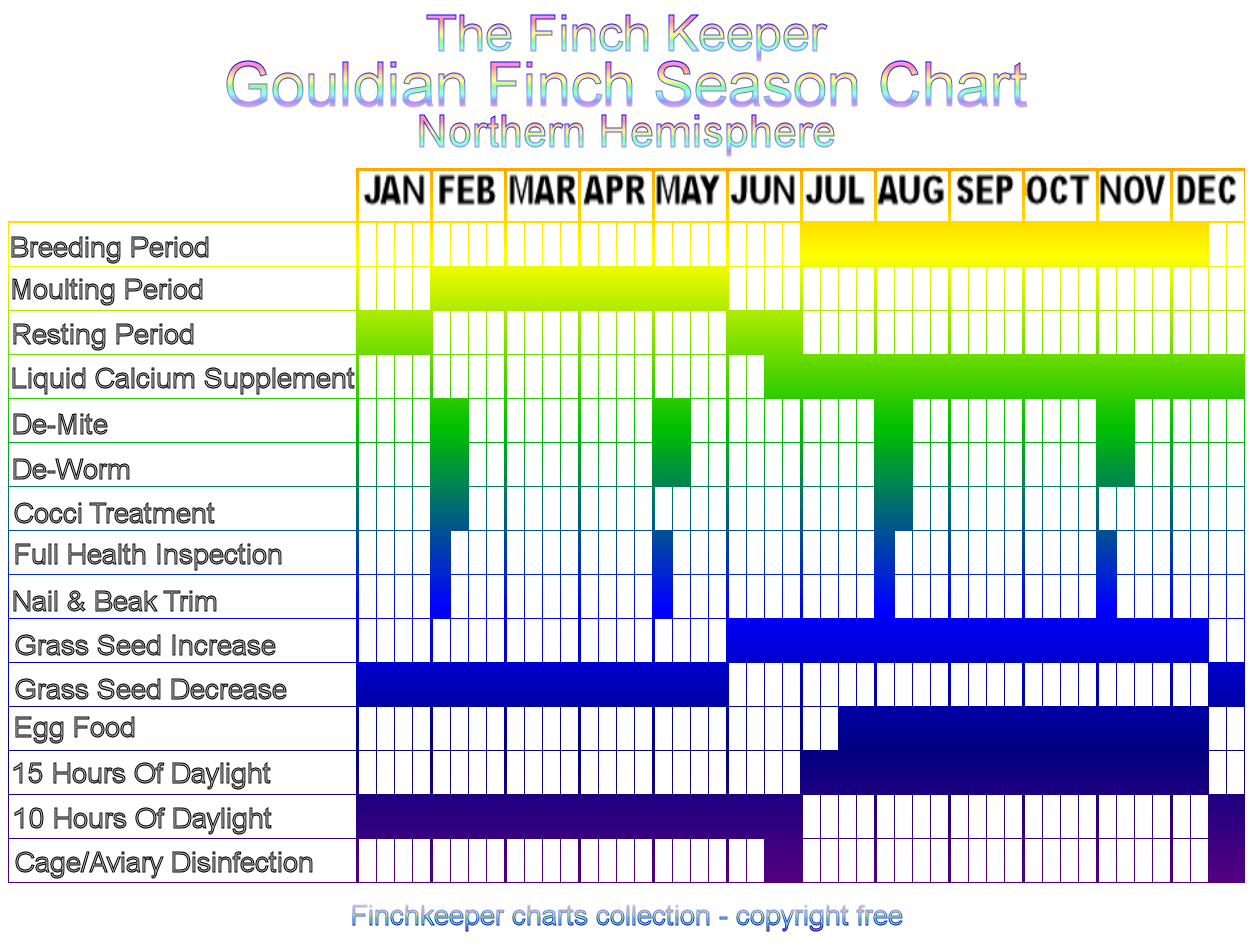
This chart is for Gouldian Finches kept in the northern hemisphere. It shows when their breeding season begins and ends, along with their requirements at different times of the year.
It is a handy chart to keep in your collection, helping you track when your Gouldian Finches were last treated and what they were treated for.
Keeping track of their moulting seasons, as well as their important resting periods, is vital to their well-being. Regular beak and nail trims may be required for some Gouldian Finches, and this chart can help you keep track of these too.
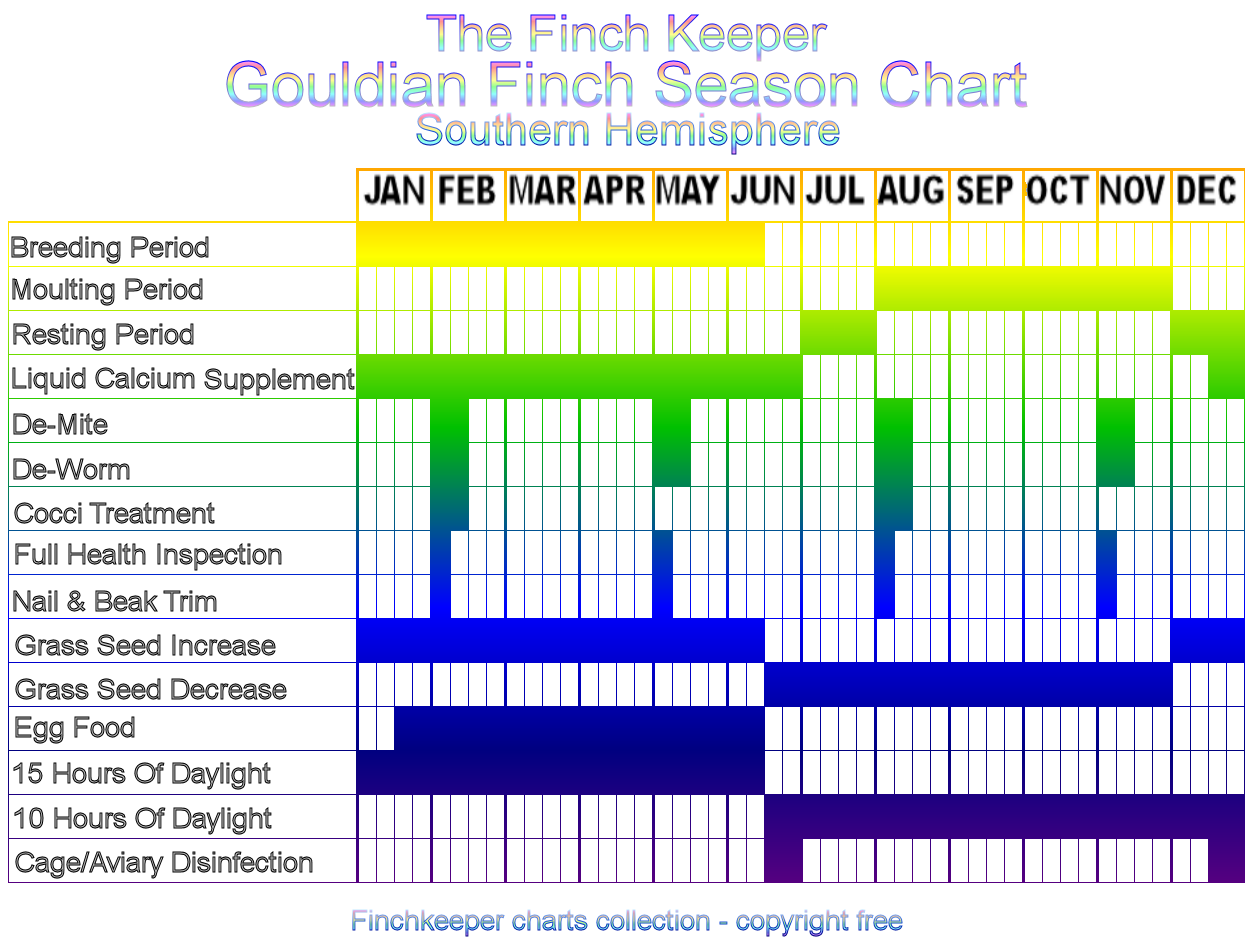
This chart is for Gouldian Finches kept in the southern hemisphere. It shows when their breeding season begins and ends, along with their requirements at different times of the year.
It is a handy chart to keep in your collection, helping you track when your Gouldian Finches were last treated and what they were treated for.
Keeping track of their moulting seasons, as well as their important resting periods, is vital to their well-being. Regular beak and nail trims may be required for some Gouldian Finches, and this chart can help you keep track of these too.
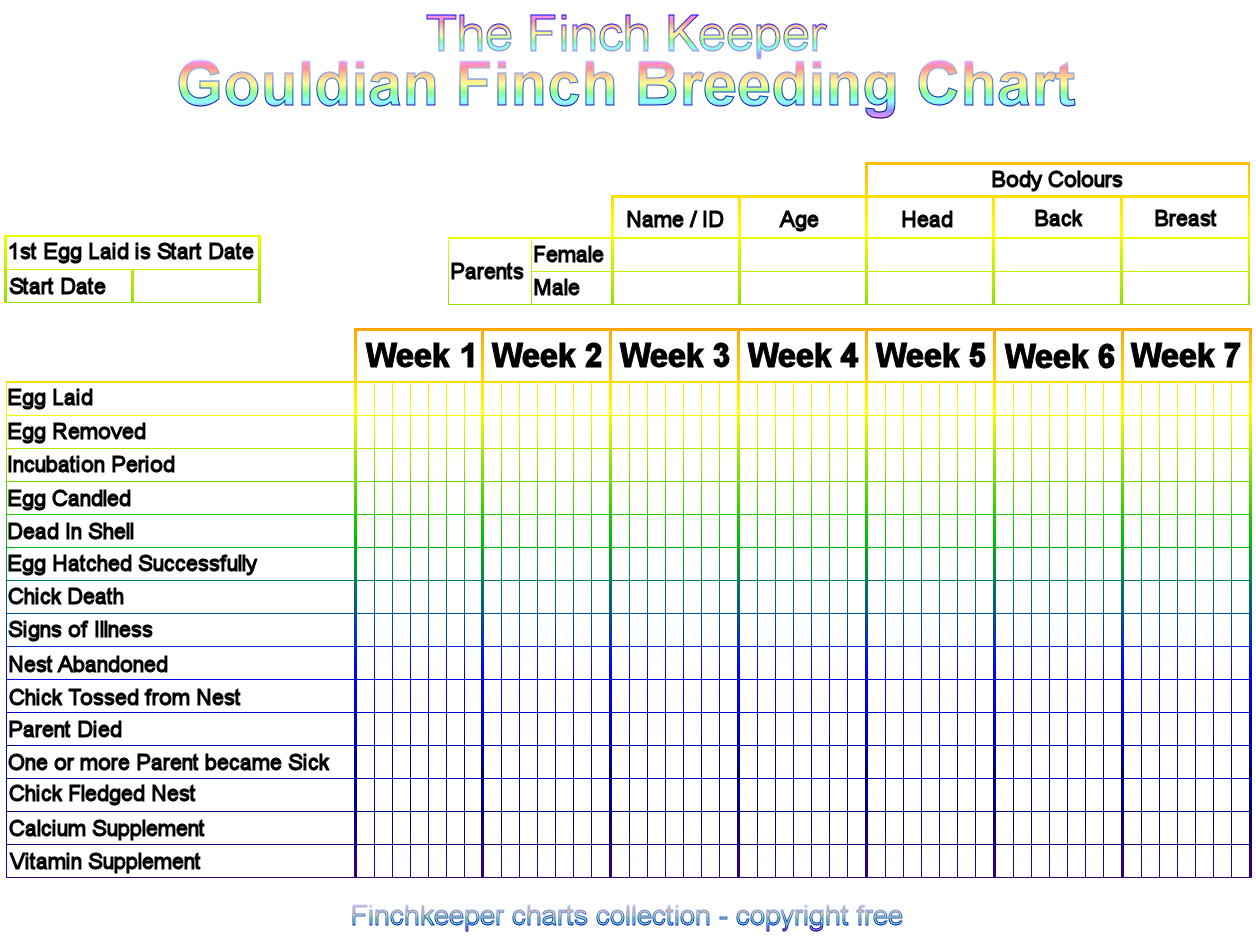
This is one of my favourite charts, as it allows you to log many things that many other charts seem to lack. You could extend the chart by adding more items to log if required, but as it stands, it is solid enough for most needs.
When it was being designed, I forgot to add a box to allow the keeper to include the cage number, but this can simply be written on the page if needed. The top section allows you to log the date the first egg is laid, the parents’ (cock and hen) names or IDs, age, and their head, back, and breast colours.
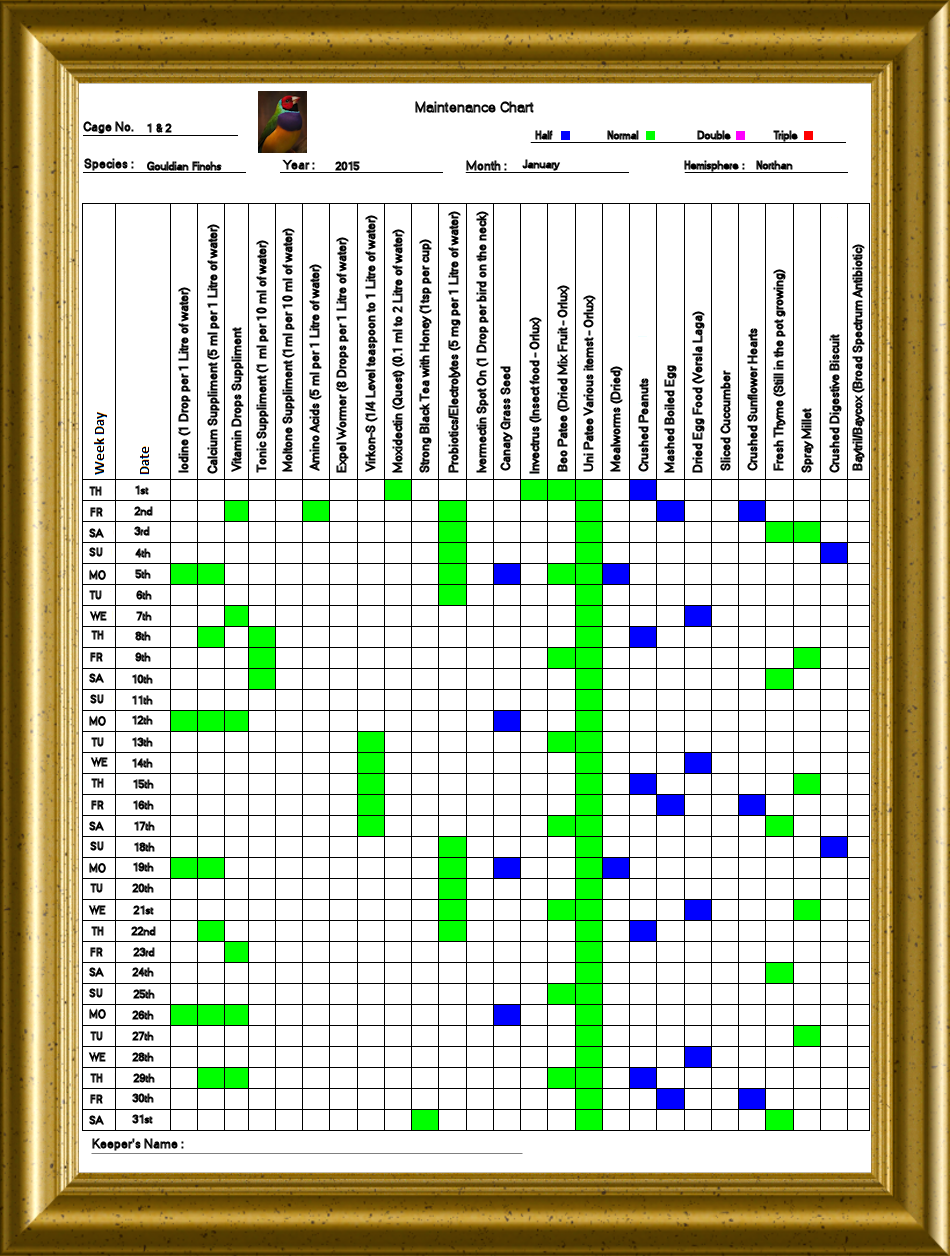
This is a demonstration version of the blank maintenance chart. It can be used however you like and is simply an example of how it may be used.
In the left column, I used MO, TU, and WE for the weekdays, and in the next column I entered the date. Across the top are columns listing minerals, calcium, medications, and more.
The small boxes in the main section were coloured to match the colours at the very top, depending on the dosage or amount given.
The page should be enough to cover one whole month. Some breeders like to track everything in great detail, so a chart like this is ideal.
Of course, in the real version you do not need to add everything as I did in this demonstration version, but it does give you an idea of how it can be used.
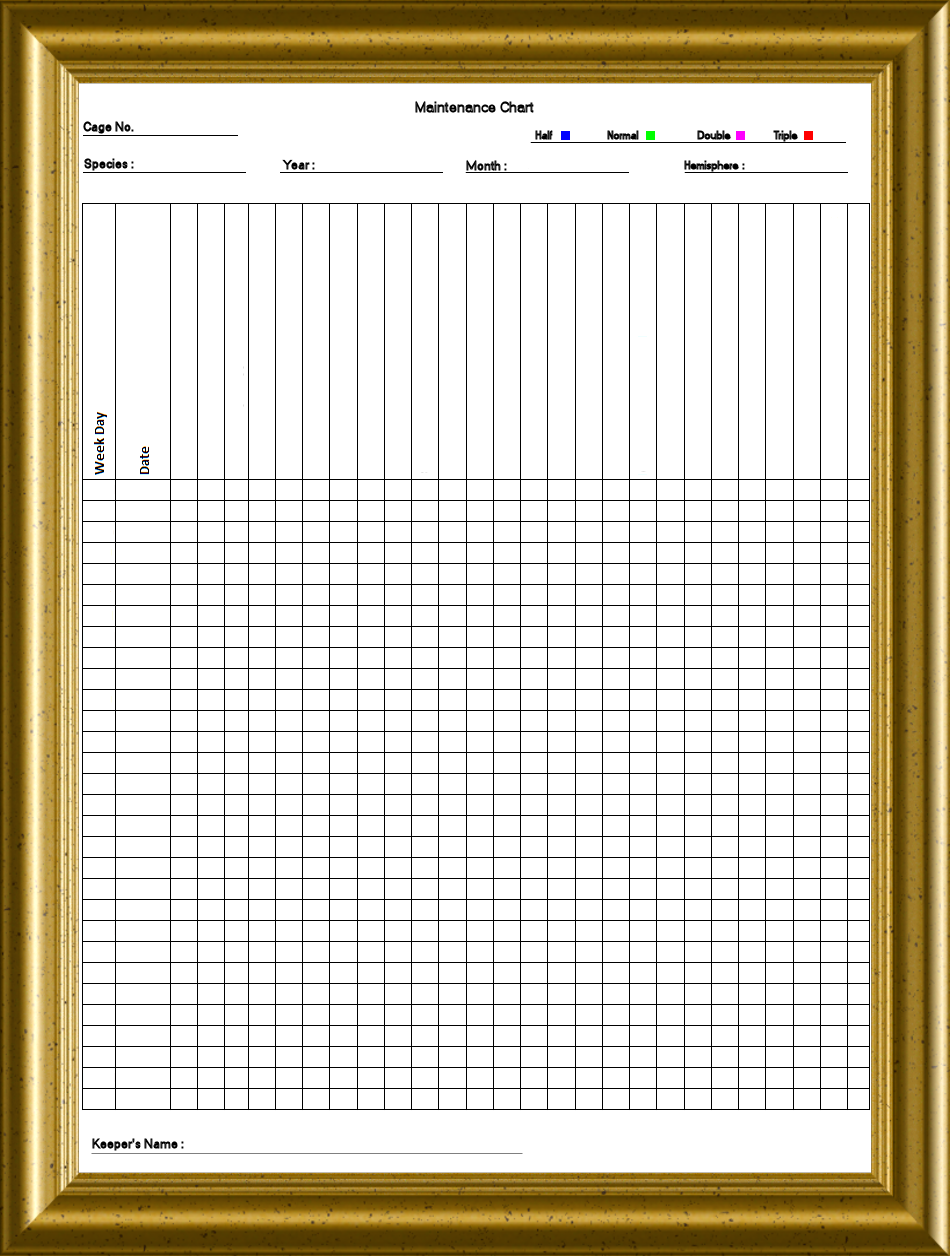
Having one or two of these charts printed out would be ideal as a backup, just in case. As shown in the demonstration maintenance chart, you can see how to use it. I can think of multiple ways to use it to help maintain your Gouldian Finches—or any other species, for that matter.
Only twelve copies of this chart would allow you to log a complete year. Keeping everything documented helps build a complete history of your birds, including health, medications, offspring, treatments, and more.
By consistently filling out this chart, you can start to notice patterns in your birds’ behaviour and breeding cycles. This can help you predict when to prepare for moulting, anticipate feeding changes, and identify any irregularities early on.
Logging offspring details, including parent colours and traits, can help improve your breeding program. Over time, you can see which pairings produce the healthiest or most vibrant chicks, giving you better insight for future breeding decisions.
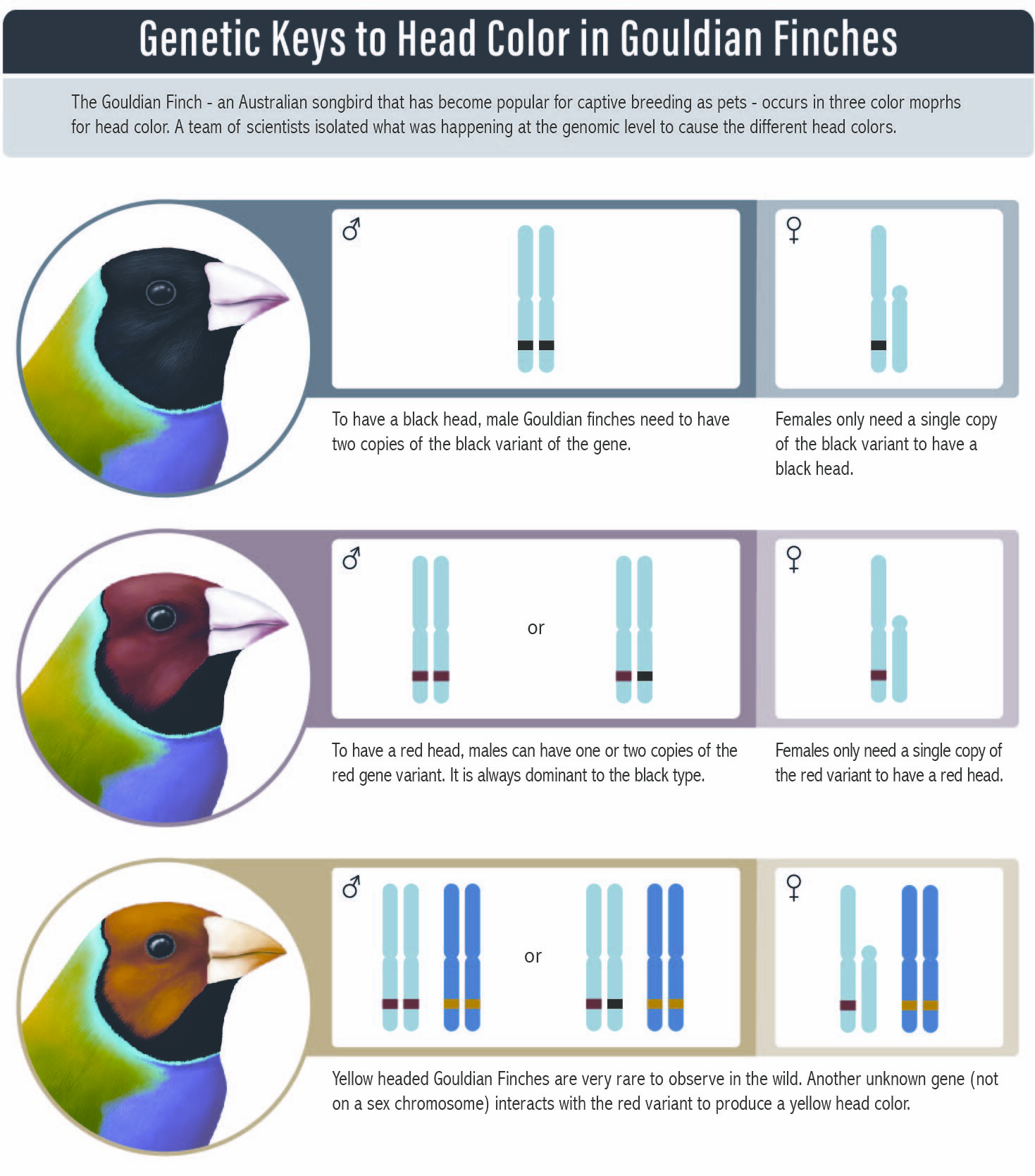
This chart explains the genetic keys for head colours in Gouldian Finches. Understanding these genetics can help predict the head colours of offspring and maintain accurate breeding records.
It shows how combinations of genes from the parents result in different head colours in chicks. By keeping track of this, breeders can plan pairings more effectively.
Use this chart alongside your offspring log to record the head colour outcomes for each breeding pair. This will allow you to see patterns over multiple breeding seasons.
Remember, genetics can be complex, and some colours may not appear as expected. This chart is a guide, but real-life outcomes may vary. Keeping this chart printed or saved digitally helps maintain a history of your breeding outcomes and improves the accuracy of future pairings.