

Please disable your AdBlocker, it helps keep Avian Directory free for all bird lovers to use.
Register an account or Log in. Logged in members do not see adverts!
Thank You
Proper lighting is essential for your birds’ health, growth, and breeding. This guide explains how UVA, UVB, and the right light duration and intensity can help your birds thrive.
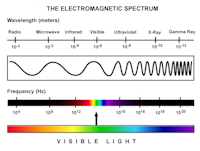
Light is quite a topic of discussion among many groups of bird keepers and quite rightly so because without it life will not function well if at all. To break it down there is the amount of light (duration) given in each day, the strength of light (intensity or lumens). The colour spectrum (infra-red to ultraviolet and everything in-between). All of these are essential to life and although you may not take much notice of light each day, your body does.
Birds, like Gouldian finches, need quite an intense light which is further up the light spectrum and at the end of the day will thrive on the UVB rays which are in the ultraviolet spectrum. The ultraviolet spectrum is not just one type of light, there are three types of ultraviolet rays, UVA, UVB and UVC, respectively.
I am not an expert on light, but I do have good knowledge on it, more than enough to write this article. I will not go into unnecessary details on the subject because I do not want to confuse you, if you wish to learn more please feel free to use a web search engine.
Abstract from Google: Birds use UVA in the way that they view the world. The inclusion of this fourth cone cell allows the bird to see wavelengths of light that humans simply cannot see, i.e. far into red and blue and also into the ultraviolet wavelength. UVA is described as the wavelengths of light ranging between 320 nm and 400 nm.
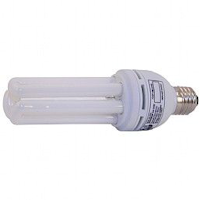
UVB is needed to produce vitamin D in your birds, this is why you should use supplemental lighting if your birds are kept indoors. (Abstract from Google: To promote vitamin D synthesis and absorption.)
Just like humans, birds need vitamin D to aid in nutrient absorption. As your bird re-grooms its feathers coated in oil, it ingests the vitamin D, which is then converted by the kidneys and liver to active vitamin D3 (cholecalciferol). Vitamin D also helps the body absorb calcium, this is why it is important your birds get the right amount of vitamin D and calcium, so the body can absorb the correct amount of calcium.
Balanced calcium levels help keep bones, feathers, beaks, claws, and eggs strong, and support proper reproduction, especially in hens. I have seen the effects of vitamin D deficiency in many captive bred birds ranging from weakness, always sleeping, poor flight, unable to perch and physical formatives.
Eggs laid by hens are often too soft or without shells and some having shells that are so hard that the chicks were unable to break out resulting in dead-in-shell (D.I.S.). Calcium and vitamin D work closely together, for without either the bird will perish.
The duration of light or the amount of hours of light they receive in a day is vital too because your birds need rest and sleep. Shorter hours of light in a day over several weeks tells the body that they are not in season for breeding.
Towards the spring when the hours of daylight get longer, it triggers their annual moult cycle to shed the old feathers and grow new ones ready for their approaching breeding season. As the daylight hours get longer, they require less sleep and more daylight hours to feed their growing offspring/chicks. They cannot raise offspring with just 8-10 hours of daylight, and those that do survive would probably be underweight or suffer with deficiencies.
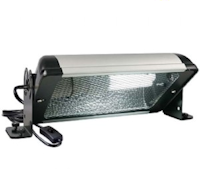
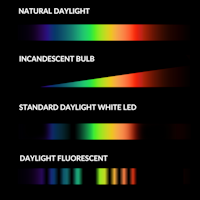
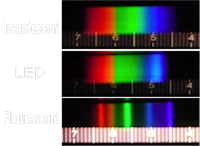
Supplemental lighting can come in many forms such as, high pressure sodium(HPS), metal halide (MH), incandescent, compact fluorescent lamps (CFL), halogen, light emitting diode (LED), high intensity discharge (HID), this probably covers most types of light bulb types. The choice you make is yours, but you must also remember that not only do you need a UVB but also a bulb that is a natural daylight (mid-spectrum) or white in the colour spectrum.
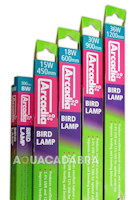
White will usually be between the range of blue, yellow and red. This white light will give the brightness required, and the UVB will produce the much-needed vitamin D at the same time.
The intensity of the light (Brightness measured in Lumens) depends on the wattage or the type of bulb you are using such as LED, the higher the wattage the brighter the light (Lumens or intensity) usually. A 50-watt LED may appear brighter than a 50-watt incandescent or HPS bulb, but it is ultimately about lumens per watt.
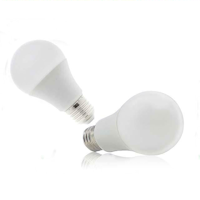
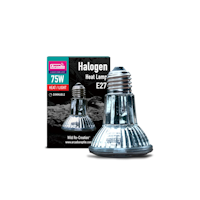
People often use LEDs because they appear brighter, which is partly true. However, I have found the best results come from metal halide lights. The downside is that they get very hot quickly and consume a lot of electricity. LED lights usually produce little heat, have limited light output, but a long lifespan. Halogens produce excellent light, get very hot but have a short lifespan, and use a lot of electricity over time.
I personally use fluorescent tubes because they are cheaper to run, easy to replace, and simple to source, providing enough light for my birds. I can buy standard white and UVB fluorescent lights which both have the same fittings and same length 2ft or (24 inches).
Remember that light including UVB rays lose intensity over distance and fluorescent UVB lights are only efficient up to about 12 inches away, so you may want to place a perch under the UVB fluorescent about 10-12 inches away.
As the hours of daylight change throughout the year, days become shorter and nights become longer, then days become longer and nights become shorter as we go through the seasons. Whilst the hours of daylight change, you need to make sure your lights come on as soon as it is daylight and turn them off when the sun goes down. In some parts of the world there are only a few hours of daylight or few hours of darkness, you will need to keep your lights on longer or shorter to make up for loss or gain of light.
In winter, it should be about 10 hours of light and summer should be about 14 hours of light. I like to increase the duration of light gradually as the days grow longer and decrease as the days grow shorter to acclimatize the birds. This is the natural way to do it, and their bodies will understand what is happening.
It is a good idea to have lights on a timer and make any adjustments accordingly. Any lights should have a protective guard, so the birds cannot burn themselves or scorch feathers. Avoid lights that get too hot to touch, as they can be a fire hazard. Never use any kind of UV lighting for your birds, it must be UVB lighting designed for reptiles or birds.
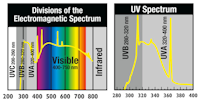
UV light is not the same as UVB and could blind or even kill your birds, or cause cancer. The best light you could ever possibly give your birds is natural light directly from the sun, but if you are in a very hot country, I suggest providing a well-shaded area and a cool bath for the birds, while leaving at least half of the cage exposed to sunlight.